Pick up any parcel on a sorting belt and there is a good chance a third of it is empty space. That space costs money twice: once in the board and void fill it takes to fill it, and again in postage, because couriers increasingly charge by size as well as weight. Choosing the right box is one of the cheapest savings a small business can make.
Measure the product, not the old box
Start with the item itself, not the box you have been using. Measure its longest side, then the next longest, then the shortest, in millimetres. If it is irregular, such as a mug with a handle or a lamp with a shade, measure the smallest imaginary rectangular block it would fit inside.
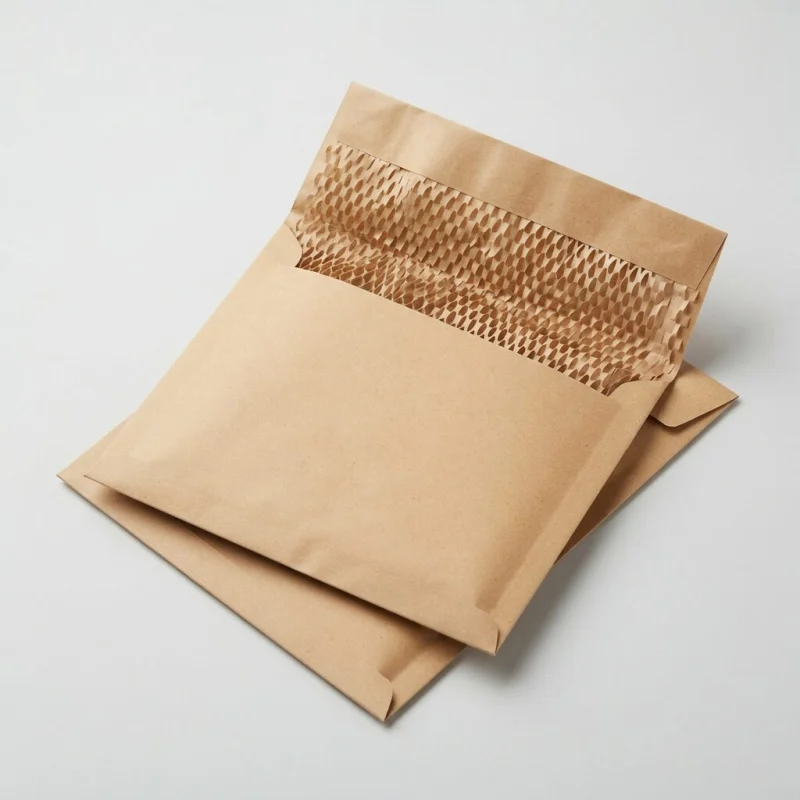
Then decide how much protection it needs. A folded jumper needs almost none. A hardback book needs a few millimetres so the corners do not touch the walls. A glass jar wrapped in two layers of honeycomb paper needs around 20 to 30 mm on every side for the wrap itself. Add that allowance to each of your three measurements, and you have the internal size of the box you need.
Read box sizes the right way
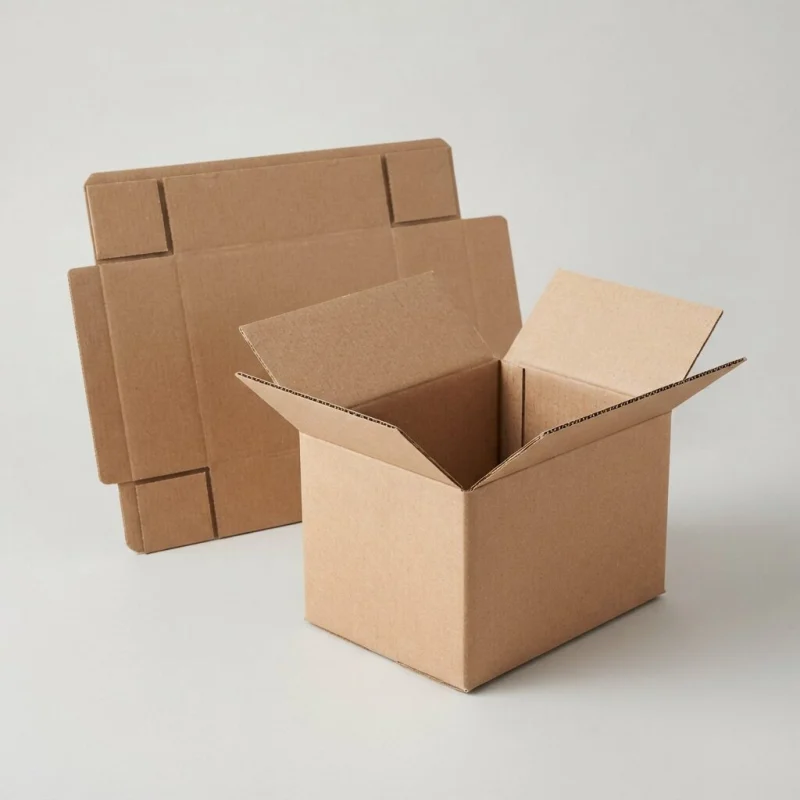
Box sizes are almost always given as internal dimensions, in the order length × width × height. Length and width describe the opening, the face with the flaps. Height is the depth from the opening to the base.
That order matters. A 305 × 229 × 152 mm carton and a 152 × 229 × 305 mm carton hold the same volume, but the first opens wide and shallow, which is easy to pack, and the second opens small and deep, which suits bottles but not books. When you compare sizes from different suppliers, check that they are listing internal measurements, because board thickness can add 6 to 14 mm to the outside.
Understand how size affects postage
Most couriers set price bands by both weight and dimensions. Many also use volumetric weight: they multiply length by width by height in centimetres and divide by a set number, often 5,000. If the result is higher than the real weight, you pay for the higher one.
A 400 × 300 × 300 mm box has a volumetric weight of 7.2 kg on that formula, even if it holds a 2 kg cushion. Move the same cushion into a 350 × 250 × 150 mm box, compressed slightly, and the volumetric weight drops to 2.6 kg. For a light, bulky item, that can be the difference between one price band and the next.
The other number to know is the cut-off for your courier's smaller parcel band. Many sit somewhere around 450 × 350 × 160 mm. If your product can fit a box just inside that limit, it is usually worth designing your packing around it.
Build a short list of sizes
You do not need a box for every product. Most small businesses we work with find that three to five sizes cover nine orders out of ten. To find yours:
- List your twenty most common orders, including multi-item ones.
- Work out the internal size each would need, using the method above.
- Group them. Orders within about 20 mm of each other in every dimension can share a box.
- Choose a standard size for each group, from stock where possible, because stock sizes are cheaper and always available.
Keep one larger box for the occasional odd order, and accept that a few orders will need a little void fill. Paying for a sixth or seventh size to save a handful of paper at the edges is rarely worth it.
Choose the board to match the load
Size and strength go together. A crash-lock mailer in E-flute board is fine for a 1 kg candle but will bow under a 6 kg box of books. As a rough guide, single-wall cartons suit loads up to around 15 kg, double-wall cartons up to around 30 kg, and anything that will be stacked on a pallet or travel a long way benefits from double wall, whatever its weight.
If an item is fragile, a stronger box is often a better answer than more wrap. A box that holds its shape protects the contents from crushing; extra bubble wrap cannot.
When a stock size is not enough
Sometimes no stock size fits. If you send hundreds of the same product each month, a made-to-measure box with a simple cardboard insert can remove void fill completely and speed up packing, because the product drops into place. It usually needs a run of 250 or more to make sense, and the first sample tells you quickly whether it works.
A five-minute check
Next time you pack an order, close the lid and give the box a gentle shake. If you can hear or feel the item move, the box is too big or the wrap is too thin. If the flaps bulge, it is too small. When it sits still and the flaps close flat, you have the right size, and you have probably stopped paying to post air.