Customers notice plastic in their parcels, and many now mention it in reviews. Most of what goes into a typical online order has a paper alternative that works just as well. A few swaps cost more, take longer to pack or protect less, and it is better to know that before you change everything at once.
Start with the easy swaps
Some changes cost almost nothing and your customers will not notice anything except the absence of plastic.
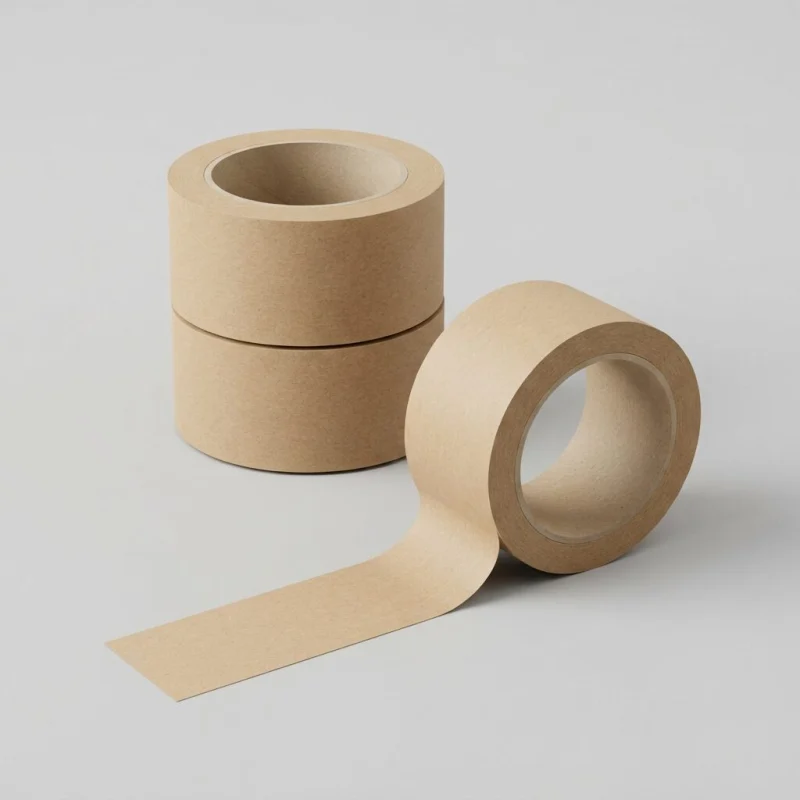
Tape. Kraft paper tape seals a carton as well as plastic tape for most parcels, works in a standard tape gun and goes into recycling with the box. Plastic tape left on a carton is one of the most common contaminants in cardboard recycling, so this swap helps your customer as well as you.
Void fill. Crumpled kraft paper, paper crinkle or honeycomb wrap all do the job of air pillows and polystyrene chips. They are heavier per box, so weigh a test parcel to check you are not pushed into a higher postage band.
Labels and stickers. Kraft and uncoated paper labels can go into paper recycling. Thermal shipping labels cannot be recycled on their own, but on a cardboard box most schemes accept them, so they are not a reason to delay the rest.
Mailers: the swaps that need a little thought
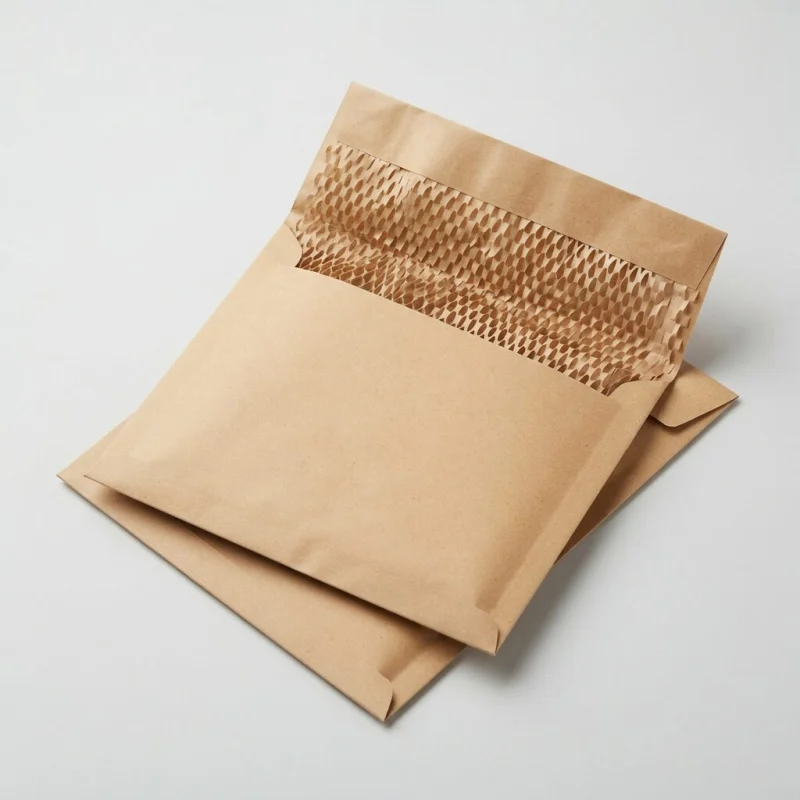
Padded envelopes. Paper-padded mailers, lined with recycled paper fibre or honeycomb paper, replace bubble-lined envelopes for books, accessories and small gifts. They protect well against knocks but less well against crushing, so add a piece of board for anything with a fragile edge.
Clothing. Here paper is a real trade-off. A paper mailing bag looks good and recycles easily, but it can tear if it is overfilled and it does not keep out rain on a doorstep. If your customers are often out when parcels arrive, a recycled polythene bag may be the more sensible choice. Many sellers use paper for small, light items and keep polythene for bulky knitwear and coats.
Fragile items. Honeycomb kraft wrap is now good enough for most glass and ceramics, provided you use two or three layers and a box with no more than 20 to 30 mm of space on each side. For very fragile or valuable items, bubble wrap still protects best, and recycled bubble wrap is a reasonable compromise.
Read the claims carefully
Packaging words are easy to misread, and a few are worth understanding before you put them on your website.
Recyclable means the material can be recycled where collection exists. Paper and card are collected almost everywhere in the UK. Polythene bags and films are not usually collected at the kerbside, though most large supermarkets have collection points.
Recycled content is the share of the material that came from recycled sources. It tells you about how the packaging was made, not how it will be disposed of.
Compostable usually means industrially compostable, tested against a standard such as EN 13432, which sets out how quickly a material must break down in a commercial composting facility. It does not mean it will break down in a garden heap, and compostable mailers should never go in plastic or paper recycling.
FSC refers to the Forest Stewardship Council, an organisation that certifies forests and the supply chains that use their wood. Paper or board sold as FSC-certified has been tracked from a certified source. If you want to use the FSC logo on your own packaging, you need your own chain-of-custody certification, so ask your supplier before you print it.
Think about cost and time
Paper alternatives are often a few pence more per parcel, and some take longer to use. Honeycomb wrap is quicker than bubble wrap once you are used to it; paper void fill is slower than air pillows unless you have a dispenser. Test a week of orders before switching completely, and time your packing so you know the real cost.
There is also a cost on the other side. In the UK, the Plastic Packaging Tax applies to manufacturers and importers of plastic packaging with less than 30% recycled content. You are unlikely to pay it directly as a small business, but it is built into the price of virgin plastic, and that gap is likely to stay.
Tell your customers what to do
Plastic-free packaging only works if it ends up in the right bin. One line on your packing slip or website is enough: "This box, tape and paper can all go in your recycling." If you still use a polythene bag, say where it can be recycled. Customers appreciate being told, and it makes the effort visible.
A sensible order of changes
If you are starting from a typical mix of plastic tape, air pillows and bubble mailers, this order spreads the cost and lets you learn as you go:
- Switch to kraft paper tape.
- Replace air pillows or chips with paper void fill.
- Move small, sturdy items into paper-padded or honeycomb mailers.
- Trial honeycomb wrap for fragile items, keeping bubble wrap for the most delicate.
- Decide on clothing based on how often your parcels meet the weather.
Most businesses can remove the majority of the plastic from their parcels in a month without any customer noticing a difference, except the one they were hoping for.