Café owners often ask our customer team whether a cup, box or bag is "allowed". The rules are spread across several pieces of law and differ slightly between England, Scotland, Wales and Northern Ireland. This guide gathers the parts that matter most to a small food business. It is not legal advice; your local environmental health team is the place to check anything specific.
Anything that touches food must be suitable for food
The core rule is simple. Packaging that comes into contact with food must not pass anything into the food in amounts that could harm health, change what the food is, or spoil its taste or smell. This applies to cups, boxes, bags, wrapping paper, lids and cutlery alike.
In practice, buy packaging sold as suitable for food contact and use it for the food it was made for. A bag sold for dry bakery goods may not suit something hot and oily.
For plastic items, including the linings of paper cups, your supplier should be able to provide a declaration of compliance confirming the material meets the food-contact rules. If an environmental health officer asks, you should be able to show where your packaging came from, so keep invoices that name what you bought.
Single-use plastic bans
Since October 2023, England has banned the supply of several single-use plastic items, including plastic plates, cutlery and balloon sticks, and polystyrene food and drink containers and cups. Single-use plastic bowls and trays are also banned when they are used for food eaten on the premises or served to order, with some exceptions for pre-packed food. Scotland and Wales have similar bans, with a few differences in detail.
Earlier rules already restrict plastic straws, stirrers and cotton buds. Straws can still be supplied on request for people who need them for medical or accessibility reasons.
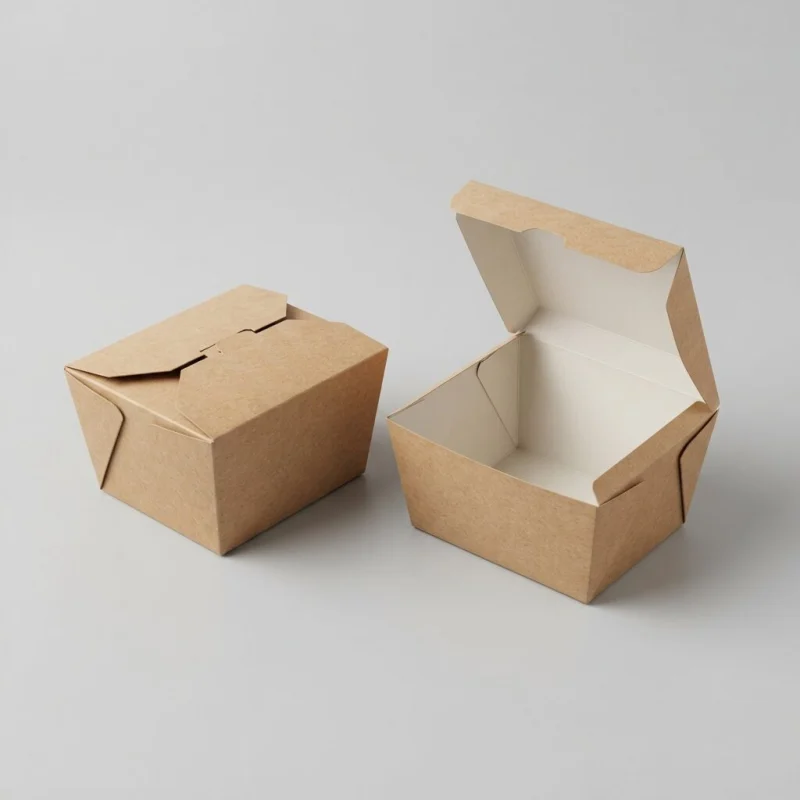
For most cafés, the practical result is that takeaway packaging is now paper, board, bagasse, or another non-plastic material, and that is what our food range is built around.
Paper cups are allowed, but they need the right bin
Paper hot cups are not banned. They have a thin plastic lining to hold liquid, which is why they cannot go in ordinary paper recycling. Many high streets, stations and larger retailers now have cup recycling points, and some councils accept cups in mixed recycling. If you sell a lot of takeaway drinks, it is worth offering a discount for reusable cups and a cup recycling bin by the door.
Compostable packaging and your waste
Bagasse clamshells, some cups and some cutlery are sold as compostable. Almost all of them need industrial composting, which happens at a commercial facility, not in a garden heap. They should go in food waste where your collection accepts them, never in paper or plastic recycling, where they contaminate the batch.
England's Simpler Recycling rules have required most businesses with ten or more full-time staff to separate food waste, paper and card, and other dry recycling since March 2025. Micro businesses with fewer than ten staff are due to follow from March 2027. If you are close to that size, now is a good time to talk to your waste collector about bins.
Allergen labels on food you pack yourself
If you make food and pack it on the premises before a customer chooses it, such as sandwiches in a chiller or boxed salads on the counter, it counts as prepacked for direct sale. Since October 2021, these items must carry a label with the name of the food and a full ingredients list, with the fourteen major allergens emphasised, for example in bold.
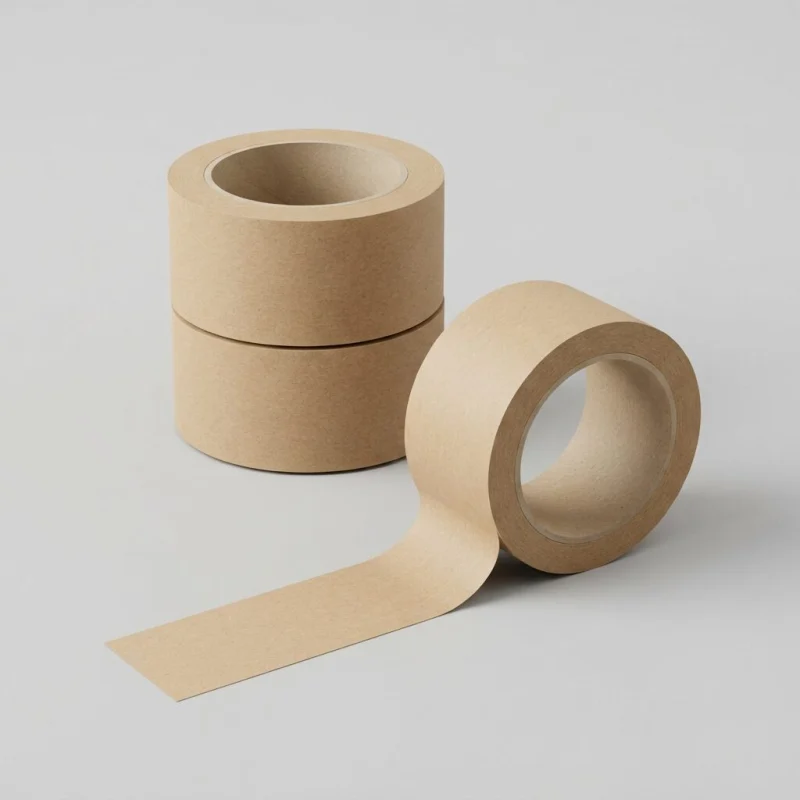
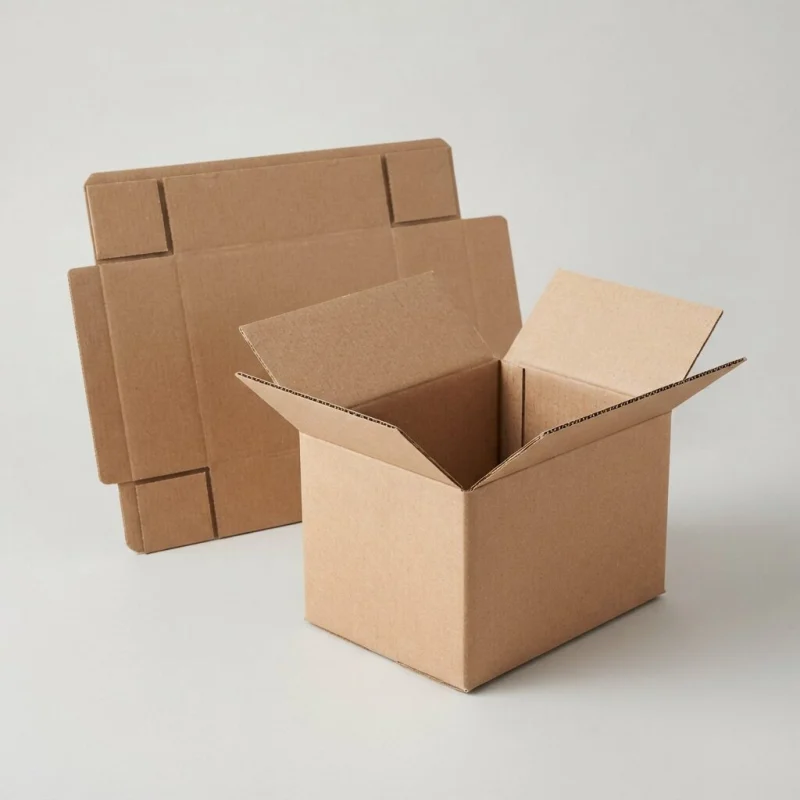
Food packed in front of the customer after they order does not need this label, but you must still be able to tell them about allergens if they ask. Plain kraft boxes and bags take a printed or handwritten label well; leave a clear panel free for it.
Carrier bags
In England, shops must charge at least 10p for single-use plastic carrier bags. Paper carrier bags are not covered by the English charge, but Scotland, Wales and Northern Ireland have their own carrier bag rules that can include paper, so check if you trade there.
Storing packaging hygienically
Store food packaging as carefully as dry ingredients: off the floor, clean and dry, away from cleaning chemicals and in its outer wrapping until needed. Throw away anything that has been damp or dusty.
Packaging producer responsibility
Extended producer responsibility asks businesses that place packaging on the market to report it and, above certain sizes, pay towards collecting it. The thresholds are set by turnover and tonnage, and most small cafés fall below them; check them each year if you are growing quickly.
A short checklist
- Buy packaging sold as suitable for food contact, and use it for the food it was made for.
- Keep invoices that show what you bought and from whom.
- Avoid banned single-use plastic items.
- Label anything you prepack for direct sale with full ingredients and allergens.
- Store packaging clean, dry and off the floor.
- Tell customers which bin your cups and boxes belong in.
If you are unsure whether an item suits your menu, call our customer team. We would rather spend ten minutes on the phone than sell you a box that softens before it reaches the customer.